

Join the mailing list!
If you’ve ever felt that sinking feeling when the headlines scream “Crash!” you’re not alone. And the headlines have been screaming this year, even as the opposite has happened and the stock market has soared!
Every generation of investors faces its own bubble, and every bubble feels like the end of the world. But history tells a different story.
What Is a Bubble? (Quick Recap)
A bubble is when prices soar far beyond what the underlying businesses are worth, usually driven by hype, FOMO, and wild optimism. Eventually, reality bites, and prices come crashing down.
Famous bubbles include:
- Tulip Mania (1600s)
- South Sea Bubble (1720)
- Dot-com boom and bust (2000)
- 2008 housing and credit bubble (not a stock bubble)
- 2017 cryptocurrency craze
Katie and I have been writing a series of articles about the speculation that we are in an AI Bubble currently. Read the first article about the AI bubble here and the second How to prepare for a stock market crash here.
Tulip Mania: The Original Bubble
What happened: In 17th-century Holland, tulip bulbs became a status symbol and prices skyrocketed—at one point, a single bulb could cost more than a house.
Crash: Prices collapsed almost overnight in 1637, leaving many speculators ruined.

Lesson: Even something as simple as a flower can become the focus of wild speculation. Human psychology, greed, envy, and FOMO, hasn’t changed in 400 years.
We buy NFTs, Pokémon, Whiskey and more based on hype and the thought that we are going to be the ones that strike it rich!
Dot-Com Bubble (2000): The Internet Changes Everything… Eventually
- What happened: Investors piled into anything with “.com” in the name. Many companies had no profits, some had no revenue!
- Peak: S&P 500 P/E hit 29, Shiller CAPE 44 (record high). For Donegan plain English definitions of P/E Ratios and Shiller Cape read our first article in this series: Are we in an AI Bubble?
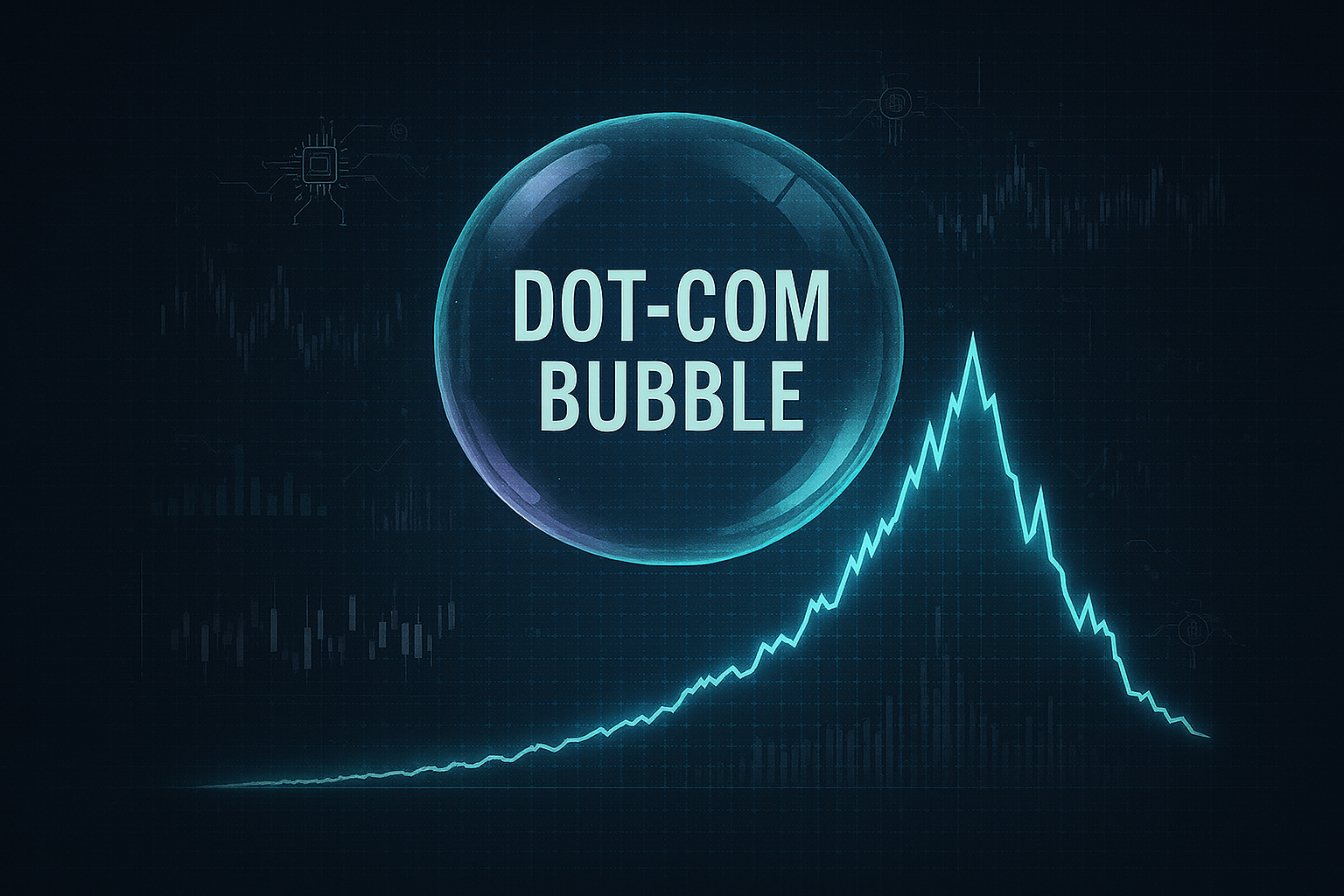
- Crash: Nasdaq fell nearly 80%, S&P 500 dropped 49% over two years.
- Lesson: The internet really did change the world, but most investors overpaid and panicked. The survivors (Amazon, Google) became giants, but only after massive volatility.
We as humans get this huge Fear of mission out FOMO feeling when others are “profiting” and we are not. This FOMO and hype that the internet would change the world drove people to make crazy investing decisions throwing money at companies that had never made money!
The expression that comes to mind here is “When everyone else is greedy be fearful, when everyone else is fearful be greedy!”
2008 Global Financial Crisis: Not a Stock Bubble, But a Crash
- What happened: The bubble was in housing prices and complex financial products (like subprime mortgages and CDOs), not in stocks themselves.
- Peak: S&P 500 P/E was 17–18 (close to historical averages), so stocks weren’t wildly overvalued.
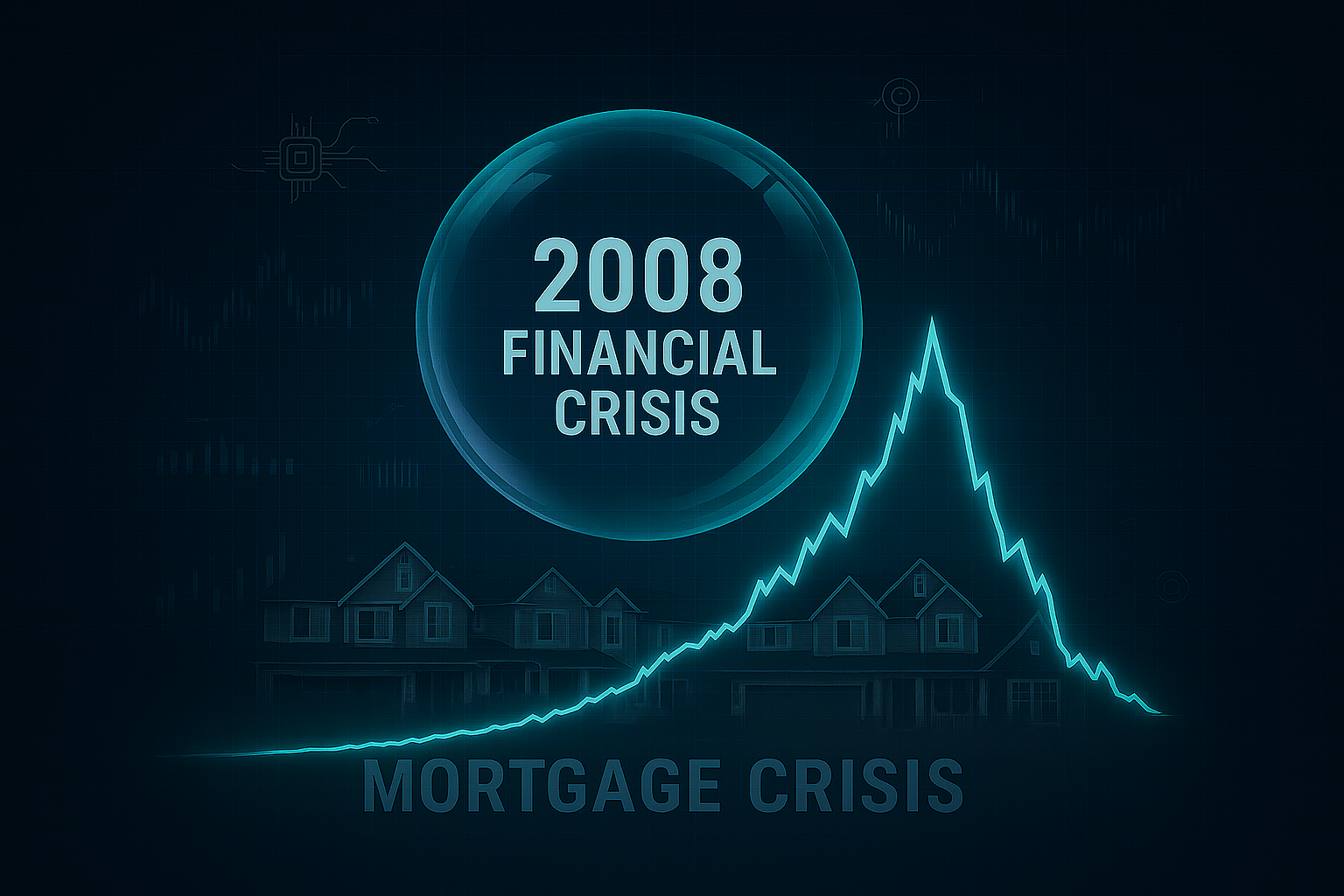
- Crash: When the housing bubble burst and the financial system seized up, it triggered a global recession and a massive stock market drop, the S&P 500 lost 57%, global stocks fell 50-60%.
- Lesson: Not all crashes come from overvalued stocks. Sometimes it’s hidden risks elsewhere (like debt and leverage) that bring the pain. Diversification and staying invested helped those who didn’t panic.
At the moment we have a lot of noise about high P/E ratios but remember that these don’t always signal a bubble or a crash. They are not a good indicator of when to dance in and out of the market. Some of the Ninjas and I are working on an article for you to show you that just using the P/E ratio or the Shiller Cape to try and time the market fails!
You can’t time the market. The best thing you can do is stay invested and ride the rollercoaster!
2017 Crypto Craze: Hype Without Earnings
- What happened: Bitcoin and other cryptocurrencies soared on pure speculation, no earnings, just hype.
- Peak: Bitcoin up 1,900% in a year.
- Crash: Crypto market lost 80% in less than a year.
- Lesson: New technology can be revolutionary, but hype cycles are brutal. Most index investors weren’t directly affected, but it’s a reminder to avoid betting the farm on the next big thing.
This is the kind of thing that gives the stock market the reputation of being like gambling, and it is when you try and pick trends!
Katie and I avoid all this by buying one simple global index fund that holds everything. We aren’t guessing, we aren’t betting on trends, we are globally invested.
What’s Different and What Rhymes With Today’s AI Boom?
- Similarities:
- High valuations, concentrated gains (Magnificent Seven), and a world-changing story (AI).
- Media loves a bubble headline and fear sells.
- Differences:
- Today’s tech leaders are hugely profitable, not just burning cash like the dot com bubble.
- Global index funds are more diversified than ever, you own over 7000 companies in the Vanguard FTSE Global All Cap.
- Investors have more tools, data, and low-cost options that any other time in history.
Emotional Lessons From History
- Panic is normal, but not profitable. Most people who panic and sell lock in losses.
- Staying invested works. Even those who retired at the worst possible time (like 2008) often ended up with more money than they started—if they stuck to the plan.
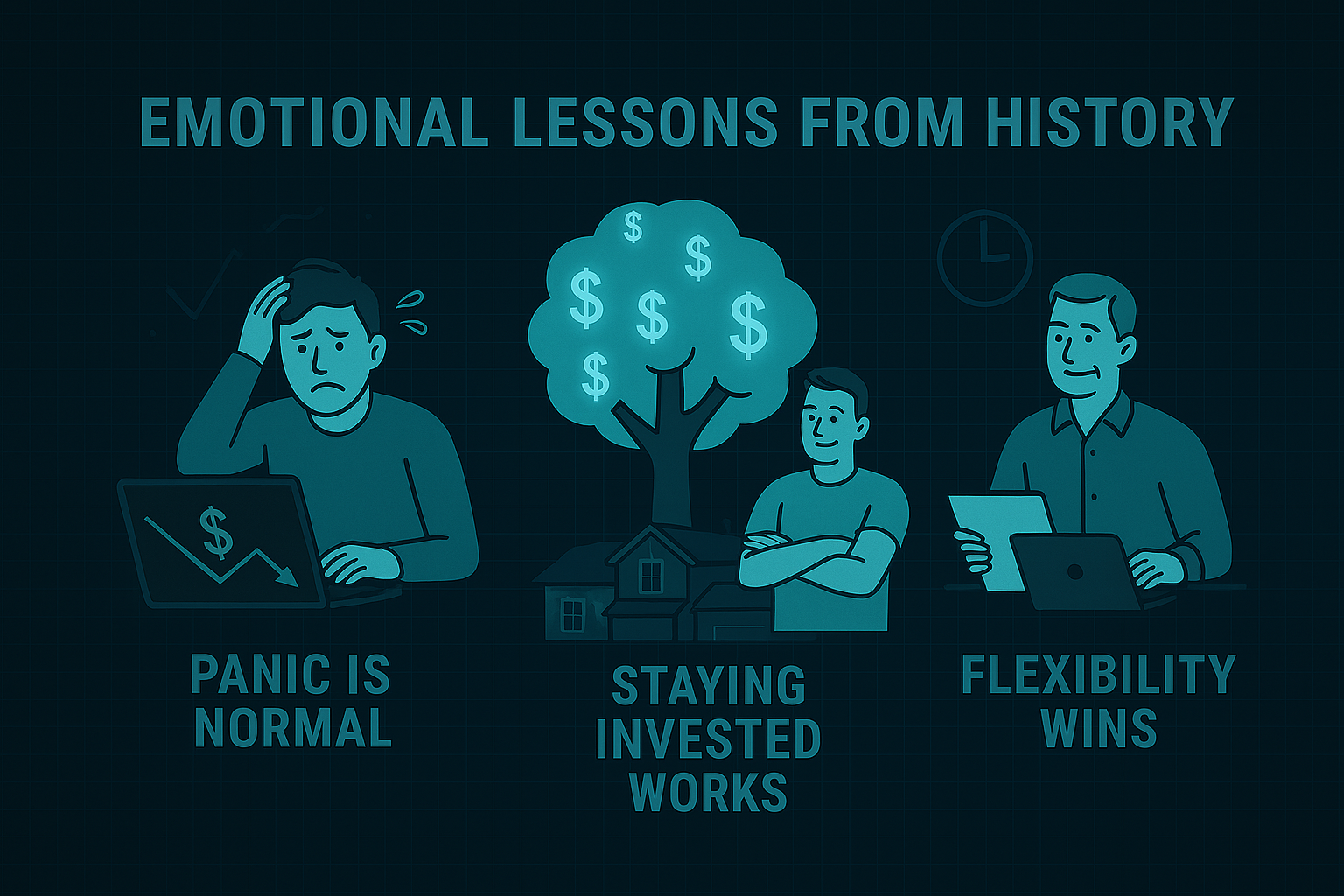
- Flexibility wins. The people who adjusted spending, earned a little extra, or delayed retirement weathered the storm best.
Emotion, fear & greed are terrible guides. Having a super simple solid plan that you can stick to, refer to and use in times of uncertainty is critical. Need help writing down your plan? Check out our Investor Policy Statement workshop and tool!
What Should You Do?
- Don’t try to predict the next crash. No one can.
- Diversify globally. One simple global index fund is your best defence.
- Have a plan for tough times:
- Flex your spending
- Consider earning a little if needed
- Stay invested, don’t jump off the ride. The way you get hurt in all this is jumping off the rollercoaster mid-ride!
Bottom Bubble Line
Every bubble feels unique, but the lessons are timeless: Don’t panic, stay diversified, and remember that markets recover, even if the headlines say otherwise. The best investors are the ones who keep their cool and stick to their plan.
Do you have a plan? Do you repeat to yourself phrases from Rebel Finance School like “time in the market is more important than timing the market” or “no-one can predict the future!”
The best investors aren’t the smartest—they’re the calmest.
What’s one thing you’ll do today to strengthen your plan?
✅ Write down your rules?
✅ Automate your investments?
✅ Share your strategy with a friend?
Tell me in the comments. Let’s build resilience together.
Peace and Pineapples
Katie and Alan
PS This article is part of a series about the possible AI Bubble. Here’s the whole series of articles for you:
Related Articles

Blog, Financial Independence, Save and Invest
Where do I put my money? Hello there! We wrote this article in 2025. Platform fees in the UK have changed a lot since then! Look out for an updated article coming soon.....With such a confusing array of platforms, funds and fee structures how do you ever decide where to put your money? In [...]

Blog, Donegan Update, Keeping Track
5th Jan 2026 At the end of the year, Katie and I always get excited because this means a chance to do our annual finance review! How often do you review your finances? Do you check daily, as some people do when they first find out about investing, or are you a set it [...]

Blog, RFS2025, RFS2026
After every single Rebel Finance School session in 2025, Katie and I sat down and wrote notes about what we could improve for next time. We had a lot of ideas. But here’s the thing we’ve learned the hard way over the years: our ideas are not as important as what actually works for real [...]
