

What’s on this page?
I know; you are priceless. Just like the rest of us! That isn’t quite what I meant. Actually there are a lot of answers to this question. When you start a business there is a decision of what to charge (your worth), there is a self-confidence answer (self-worth) and there is a personal finance answer of your net-worth.
Can you confidently and accurately tell me your net-worth?
Most people can’t. They start adding things up in their head… how much is my house worth? What is my car worth? They have a rough idea but no real clarity.
Why even bother calculating your net-worth? The first step to change is to take a good look at where you are right now. If you don’t know your starting point it is difficult to know if the change you are creating is moving you in the right direction or not. If you can’t clearly give a £ or $ figure for your net-worth then this article will help you figure it out.
After all, what gets measured gets improved.
What is your net-worth?
The common definition is the value of your assets minus your liabilities. Even the definition has technical terms in it and there is huge debate as to what counts as assets and liabilities!
Putting this into easier to understand language… net-worth is how much you would have if you sold everything you own and paid off any debts. Your net-worth is what you have left.
Katie and I define net-worth as things you own minus money you owe. We split things you own into Freedom Fund, Valuable Liabilities and Cash & Planned Spending. Money you owe is debts. We’ll go through what each of these mean in this article.
Net-worth is a snapshot in time of how much you have. It will fluctuate day to day and we calculate ours once a month.

In the Donegan household we have very different definitions of assets and liabilities compared to what an accountant will tell you. We think differently to most accountants and most of society and it means we have very different results in terms of our money. It’s this thinking that allowed us to retire at 35 (Katie) and 40 (me). Whatever your age, we’re excited to share that thinking with you in this article. Read on!
Why bother calculating your net-worth?
Have you heard the expression what gets measured gets improved? I hope so, I’ve already used it in this article.
A close analogy to personal finances is body weight/health. In your twenties you are fit and healthy and moving lots. Then you get a desk job and move a little less and still keep eating. You put on a few extra pounds each year which you don’t really notice. Eventually; at about 40 years old you look down at your body and think “where did that come from!!??”
If you were measuring your weight or body fat % once a month and noticing if it was trending up or down you could do something about it and take control. But the lack of measurement means you don’t notice the small movements day to day, week to week or month to month. If you aren’t measuring, how can you know if you are making progress or or heading towards a future you don’t want?
Do you know if you are making progress on your personal finances? Do you know if you are better off this year than last? Do you know if in the last decade you have improved your situation or not? I am sure a lot of you have a feeling that you have, but can you empirically say so?

Alan – Where did this come from?
If you eat a little too much, don't move enough then the belly creeps up on you without you noticing.
If you aren’t measuring your net-worth and checking to see if it has moved in the right direction or not, you are leaving one of the most important areas of life up to chance.
You are drifting down the river of life with no idea if you are heading towards financial destruction over a waterfall or a wonderful retirement of wealth!
Katie and I took control of our net-worth around about a decade ago and have been tracking it consistently for the last 10 years. It is AMAZING the difference this focus has made to our lives. It creates positive discussions every month about how we can work together to create the financial future we both want.
Just the act of working out your net-worth, monthly can change your financial destiny. It is one of the most important first steps in taking control of your finances. This is the content from week two of the Rebel Finance School, which is a free course that Katie and I run to help people take control of their finances!
How do you calculate your net-worth?
This first time I did this exercise I was on a training course and didn’t have very much at all. I was struggling to find things to put down. I thought “I own a computer, some clothes and a sofa! Does that count?”
I was adding anything I could to get above zero! If this is you then that is ok, take a breath and we can work on improving this figure together. We no longer include things like computers, sofas and cars because, yes they have value but they aren’t an asset.
It can be a bit more confusing as to what to include or not. There are lots of different thoughts on what should be included in your net-worth and what shouldn’t. I am going to tell you what Katie and I do and why.
What’s included in each element of your net-worth?
We’re going to go through each of the four elements one by one!
But before we do that we need to explain a few terms the Donegan way. Assets, liabilities, valuable liabilities and speculation…. Taking control of your finances is a bit like learning a new language. There’ll be some new words to learn and we just have to slowly work through each one at a time!
Difference between an asset and a liability
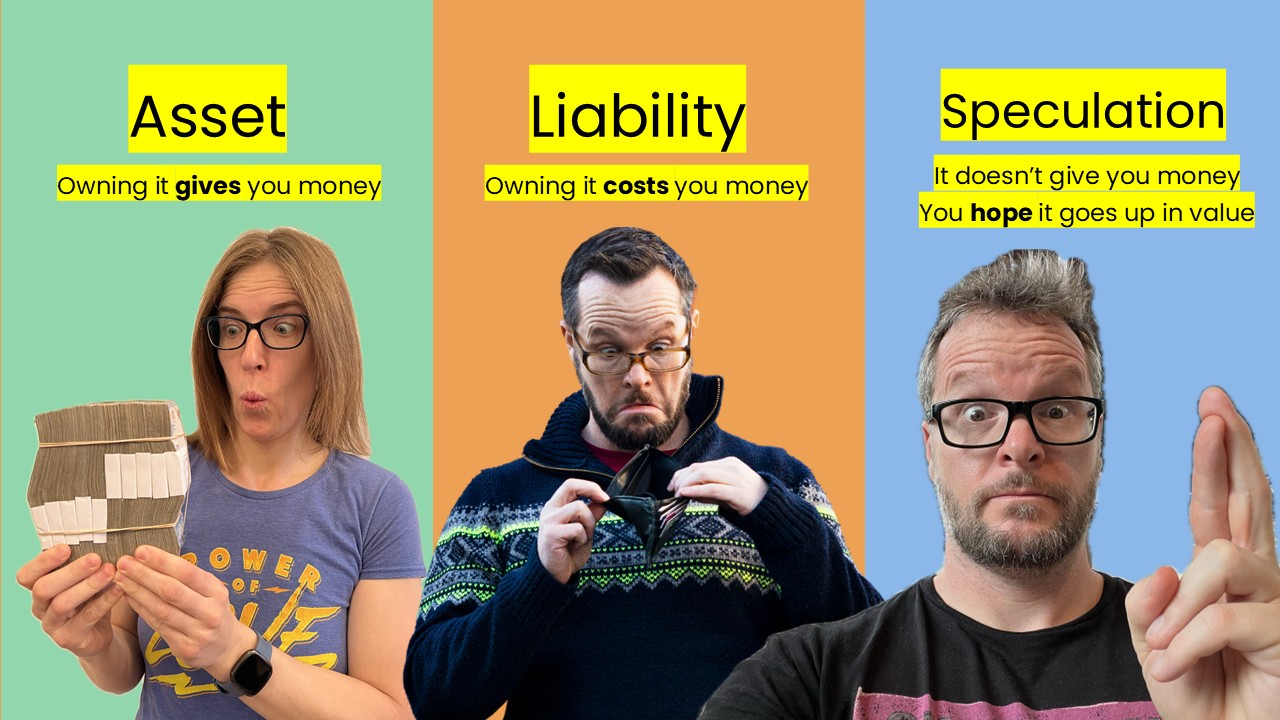
Asset = owning it gives you money
Liability = owning it costs you money
Is your car an asset or a liability?
Owning a car costs you money every month in maintenance, repairs, insurance, new tires… the list goes on! It’s at this point that people stop us and say “Donegans! I drive my car to work so it’s an asset because it gives me money right?!” to which we say “Nice try. Driving your car to work isn’t giving you money, the work you do for your employer gives you money, you’re just using your car as a tool to get there!”
Are stocks and shares an asset or a liability?
Stocks and shares are ownership in a company which entitles you to profits of that company. So they are assets because they give you money. We are talking about buying and holding for the long term and buying a diversified portfolio through a low-cost broad-based global index fund or ETF. If you are buying individual companies purely in the hope that the value of the shares will go up or you are day trading then that is speculation! Learn more about investing here or come to Rebel Finance School where we go through it all in depth. Speculation?! What’s that? Time for a Donegan definition
Speculation = it doesn’t generate income. You’re gambling on the price going up and you’re hoping to sell it for more than you bought it for
Examples of speculation
- Whiskey
- Wine
- Jewellery
- Gold
- Bitcoin and other cryptocurrencies
Is the home you own and live in an asset or a liability?
In many cultures the home you live in is meant to be one of your biggest assets. You buy as big a property as you can, get a huge mortgage which you pay down over the next 25 years and then you are left with equity in the home at the end. It is a type of forced savings plan.
The problem is that you have to sell the home, downsize or re-mortgage to get to any of that equity! You can’t really live off it, you live in it!
The most extreme example of this was a friend who was desperate to retire. He was around 50, he had no mortgage and a huge and gorgeous flat in an incredible location in London. The flat was worth £3,000,000. Yes you read that right. The problem was he didn’t have anything outside the flat. So he had to keep working.
He had a choice, sell the flat and he could move anywhere and be financially independent instantly, or live in the flat and continue to work as he had to have money for bills, food etc. He wanted to live where he lived. The house you live in isn’t going to pay for your retirement.
The definition of an asset for Katie and me is something that gives you money. Does the home you live in give you money each month? No! The opposite. It strips money out of your pocket through the mortgage, utilities and repairs. They can be hugely expensive things!
Our definition of a liability is something that costs you money to own. The home you live in falls under this category!
Now you can turn the home you live in into an asset by kicking out your kids and renting out their room to paying tenants (which my Mum threatened to do for years!). This means the home you live in now gives you money each month. There is a cost to this though as you have to share your home.
House hacking is an amazing tool to create wealth and change your home from a liability to an asset. This is a big subject we can talk about another time.
Recently Katie and I have turned our home into an asset by renting it out. We went travelling round the world and rented it out and this has created an extra cashflow for us. We do spend a lot on renting Airbnbs though!
The home you live in, in retirement reduces your expenses if you have paid off the mortgage but it doesn’t bring in any income to pay for groceries or bills or fun things to do with the grandkids!
When we say that your home is a liability we usually hear many disgruntled cries from the homeowners… “A liability! How dare you?! My house is not worthless!”



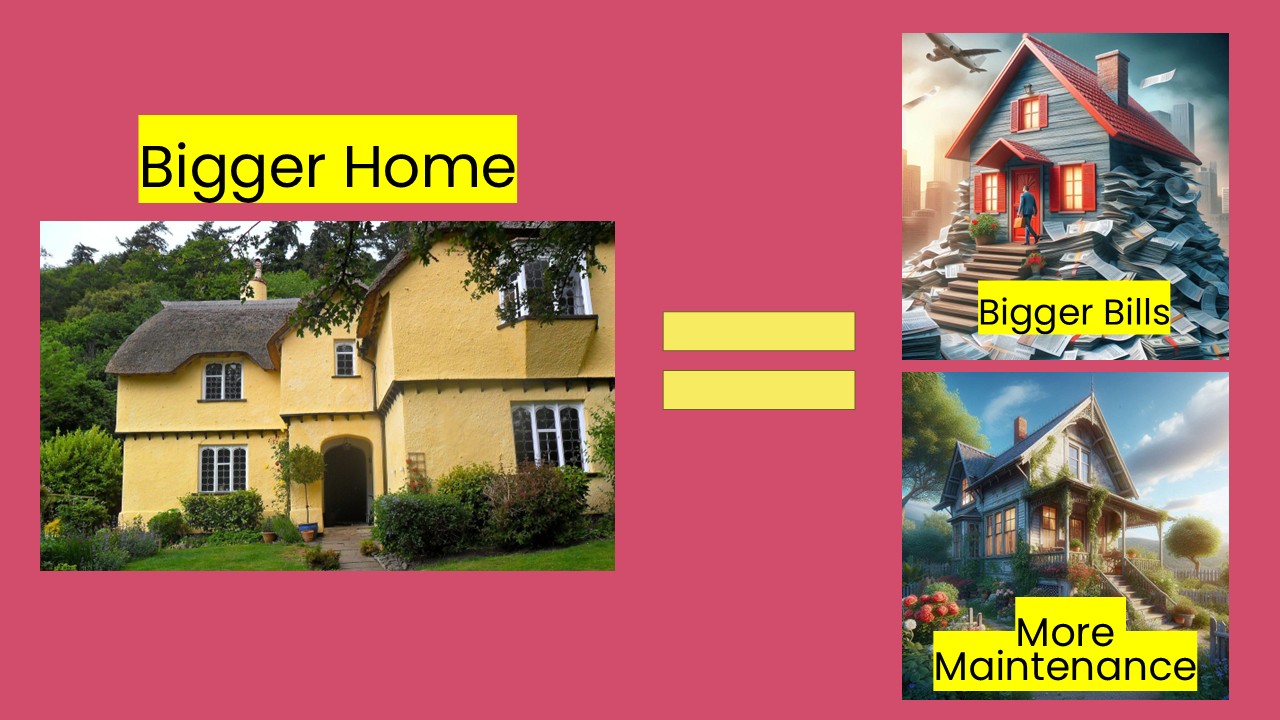
Of course your home is not worthless! That’s why we make the distinction of saying it’s a valuable liability.
Time for a new Donegan definition…
Valuable liability = owning it costs you money AND it has value
Told you we think about things differently around here!
In reality the home you live in can be worth a huge amount of money and you could sell it and get that cash out, but then you wouldn’t have anywhere to live!
It is an important distinction to make in working out retirement dates and planning your financial future that we need to include here. We made a video all about this! Our most controversial video yet!
Scroll down for FAQs
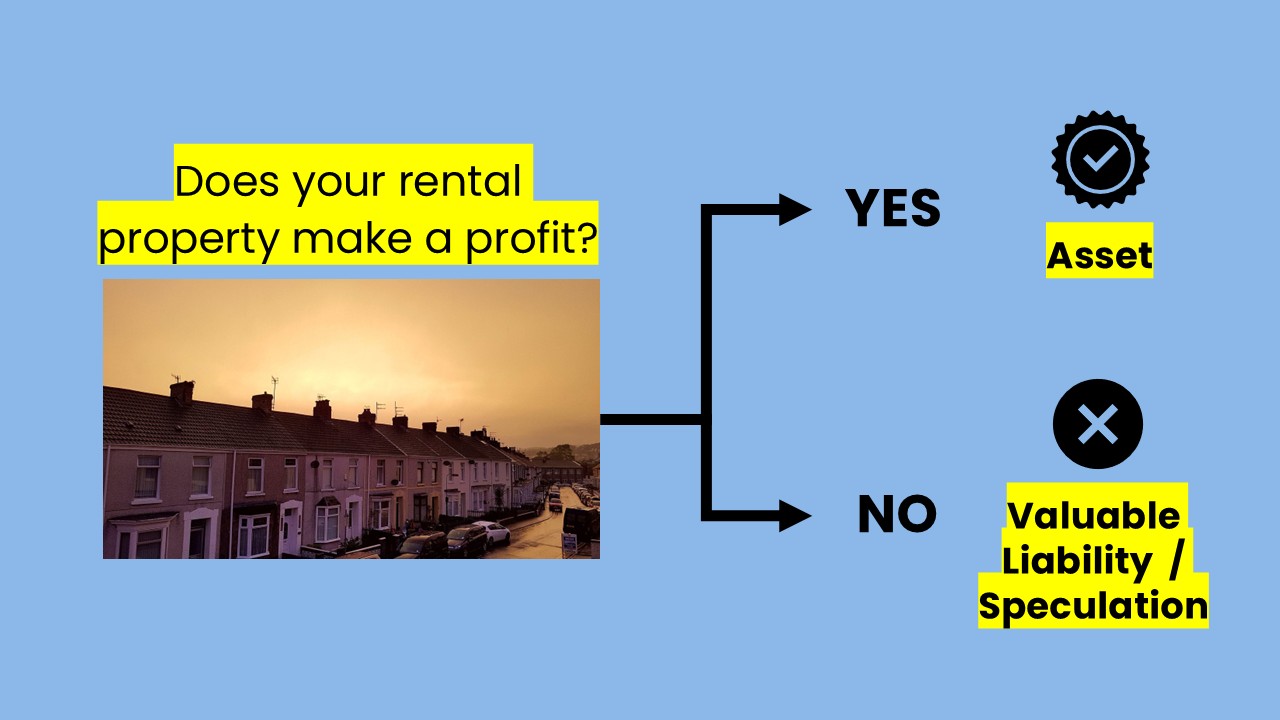
Is a property you own and rent out an asset or a liability? (often called a Buy To Let (BTL) property in the UK)
Well it depends! Does it give you money every month? Is the rent you receive more than the costs of owning the property? If yes, it’s an asset. If no, it’s a valuable liability or maybe even speculation if you’re owning it with the sole hope of it going up in value.
Let’s look at each element of net worth
Now that we’ve explained assets, liabilities, valuable liabilities and speculation, we’re ready to talk about what goes into each element of your net worth.
Freedom Fund
Your Freedom Fund is where you count your assets. This includes…
- Retirement accounts
- In the UK we have…
- Workplace pensions
- Defined benefit pensions
- Self-Invested Personal Pensions (SIPPs)
- In the UK we have…
- In New Zealand you have KiwiSavers
- In the USA they’re called 401(k)s and IRAs
- Other stocks and shares investment accounts – stocks and shares ISAs (UK), general investment accounts/taxable accounts, PIE accounts (New Zealand)
- Bonds (you will know what this is if you own them, if not then ignore it for now)
- The equity in investment properties IF they are making you money each monthly. IF the rent doesn’t cover your costs then it’s a valuable liability. Equity means a current valuation of the property minus the mortgage you own on it.
What doesn’t go in your net-worth tracker?
When it comes to deciding on what’s in your Freedom Fund, people are desperate to find anything to put in it. We get it, it makes us feel richer and happier with our life choices. It is important to see things as they are. Not better than they are and kidding ourselves into feeling wealthy with a nasty surprise in the future! Let’s have an honest look at where we are! This is what we don’t include:
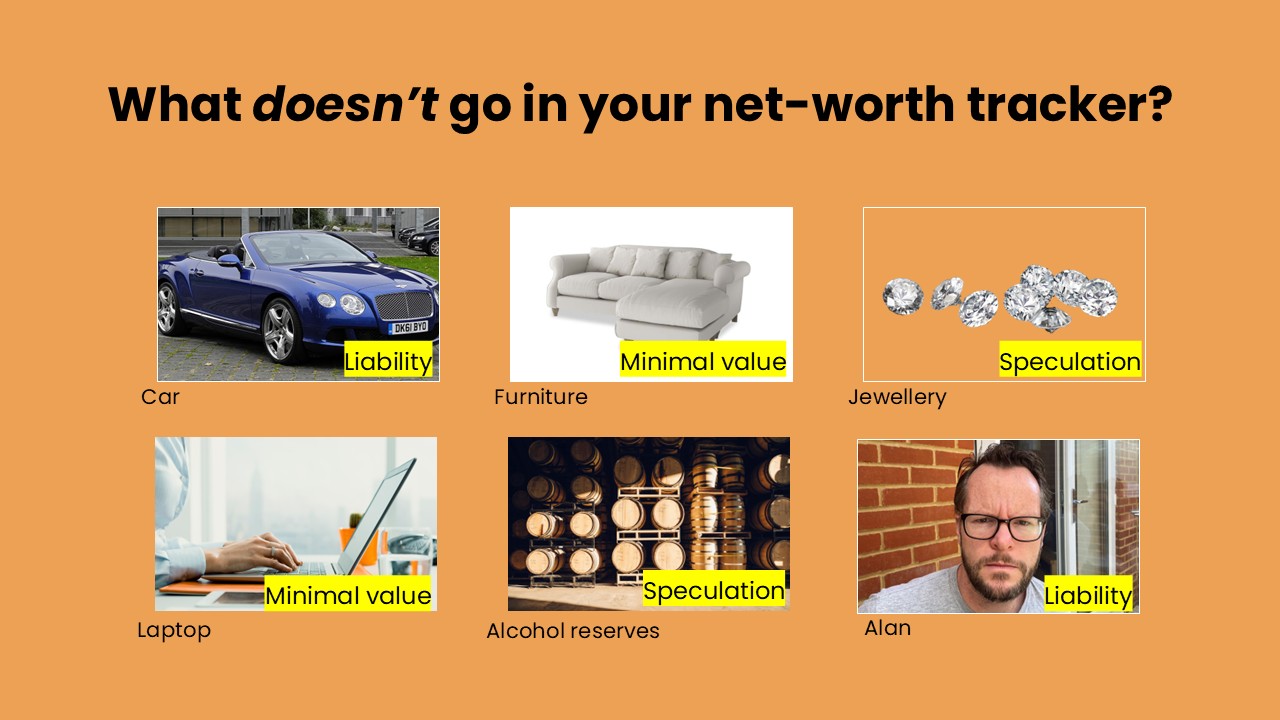
- Car. We believe this is a liability and depreciating every month and even if we sold it we would have to buy a new one! So we don’t put this in our list as we believe it falsely inflates your net-worth. Accountants will tell you that is an asset because you could sell it to bring in some cash but it doesn’t fit our definition of what an asset is as it strips money out of your pocket every month!
- Furniture and Stuff. We don’t include anything in our house in our net-worth. Jewellery, TVs, furniture etc. They are probably worth a lot less than you imagine and they aren’t contributing to making you wealthier. In fact just the opposite in 99% of cases!
- Business Valuation. I never included any of our businesses in our net-worth. They are worth something but putting a figure on it is really difficult and could you actually sell it? Would someone give you money for it? We do include the cash we have in the businesses because we see it as ours (after tax) but we do not include the actual value of the business. If you have a business you might want to include a line for the bank account of the business.
- Alan – I petitioned Katie quite strongly that I had value and that should be reflected on our net-worth statement. She said that she couldn’t sell me so there for I was not going to have a value on the bottom line. FYI she is open to offers I believe.
Valuable Liabilities
This is where you capture the equity in the home you live in (if you own it) and the equity in any investment properties you have that have a negative cashflow (the rent doesn’t cover the costs of owning it).
Equity = current value of the property minus the mortgage on the property
Cash and planned spending
We’re onto the third and final element of things you own
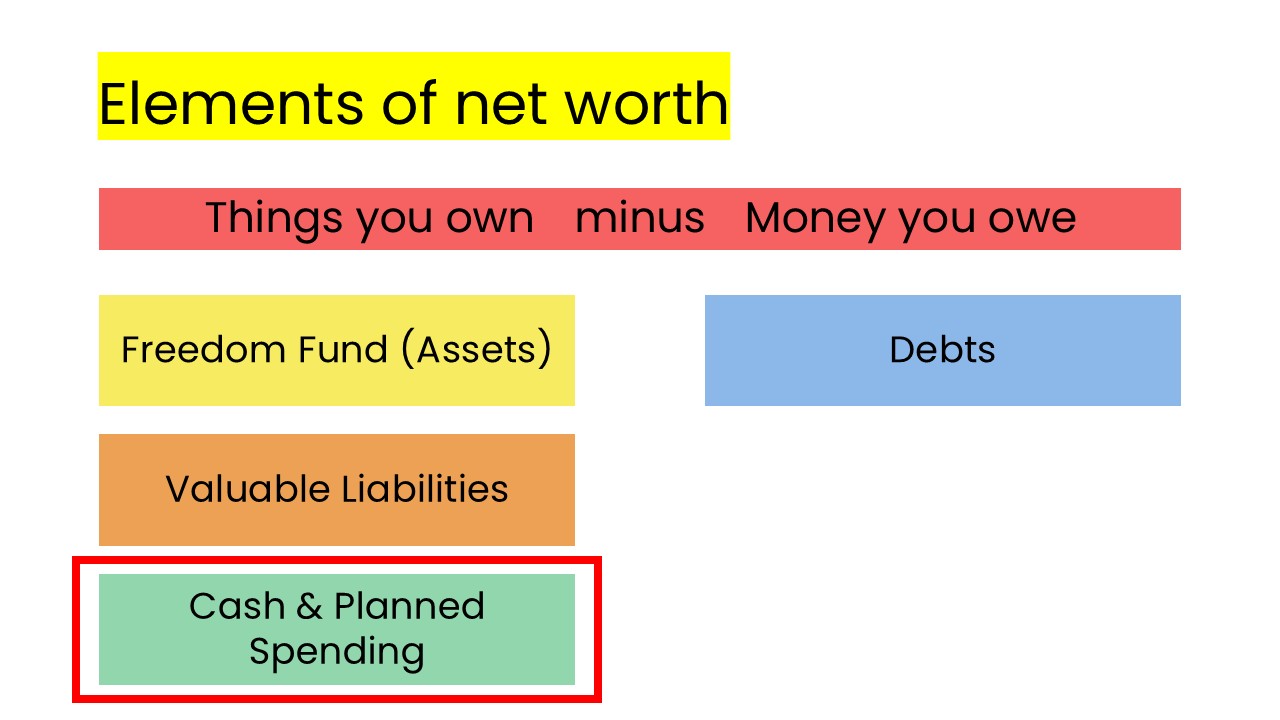
When people have completed Rebel Finance School we often hear…. “I thought I was really good with money”. What this usually means is that they are good with planning spending. They always have cash for holidays, Christmas presents and entertainment. They are good at making sure they have enough for the things they want, they’re organised but they’re not making progress towards buying their freedom by building their Freedom Fund.
This is the element where you capture all the cash pots you have sitting around…. cash ISAs (UK term), money you have in your current account or checking account, any money you have set aside for future purchases… the car fund, the gift fund and more!

Debts
This is all the money you owe other people…
- Credit card debt (if you pay this off monthly then you don’t need to include it)
- Loans – do you have any loans you owe?
- Car Loans
- Student loans
Hang on a minute…. why isn’t your mortgage here?
We put your mortgage against the value of your property in the valuable liabilities section. Why? People focus on getting rid of their mortgage to the detriment of their financial success. Now of course you can overpay your mortgage as well as building your Freedom Fund. And we’re not saying don’t have a repayment mortgage, you should absolutely pay off your home. We’re just saying that rushing to pay it off is not buying your freedom. And we’re all about buying your freedom around here! So by including it in the valuable liabilities you can see that by paying off your mortgage you’re making your valuable liabilities element bigger!
Read more about our thoughts on investing vs mortgage overpayment here
Total net worth
Now that you’ve calculated each of the four elements, you’re ready to reveal your total net worth.
Add together Freedom Fund, Valuable Liabilities, Cash & Planned spending then subtract your Debts and voila! You have your net worth.
For example
Freedom Fund = 122,500
Valuable Liabilities = 143,000
Cash and planned spending = 6,700
Debt = 8,600
Total net worth = 122,500 + 143,000 + 6,700 – 8,600 = 263,600
What’s your split?
We’re going to get you to do a full net-worth calculation but we’re curious to know… based on what you’ve read so far, what’s your best guess of your net worth and the split between the four elements. Pop over to this page… we’ve made you a fun tool where you can visualise your net worth split…
How do I calculate my net-worth?
That is the theory and now comes the action. Nothing in your life will change unless you take action. Your homework from this article is to actually calculate your net-worth. We wanted to make it super easy for you to do so we built a free spreadsheet template that you can download and use. Katie also wrote a useful guide to doing it.
The power of the monthly finance meeting
Is this a one off project? NO! What gets measured gets improved.
Every month Katie and I have a monthly finance meeting. We SO look forward to it. Amazing breakfast, chat about money and connection. We calculate our net-worth and then discuss the results. We get very excited to see if it is moving in the right direction or not! Is it weird that the monthly finance meeting is one of the highlights of our month!??!
We have filled out a net-worth tracker every month for nearly a decade. It is incredible to watch it grow as we focus on it.
The key thing is to measure and then do something small each month to improve your situation.
What gets measured gets improved. Just the act of measuring your net-worth helps you become conscious of it and take action to move it in the right direction.
And with a nice coffee and breakfast what is there not to enjoy?

Donegan Monthly Finance Meeting – Breakfast Berlin
After an incredible breakfast out, we are calculating out net-worth and doing our monthly finance meeting
Nothing is happening
People always overestimate what they can achieve in a year and VASTLY underestimate what they can achieve in a decade. Just start tracking and take small actions every single month. You will be amazed at how these actions compound over time to get you where you want to be.
We got a message this week from someone who had come on the Rebel Finance School course last year and in the first year improved his net-worth by £10,000. He was shocked that he had made that much progress. He only knew this because he had been tracking.
Start tracking. Make it fun. Do it with the people you live with.
Thanks for reading the article and please let us know how you are getting on. We write these articles and create the spreadsheet to help you.
Have fun working on your finances.
Love, peace and pineapples
Katie and Alan
PS Read on for the frequently asked questions.
Frequently asked questions
Every time we run Rebel Finance School there are a tonne of questions about this portion of the course. Here are some of the most frequently asked questions. If you have a question use this google form to submit it
This has been a hot question after week 2 of the Rebel Finance School which is all about net-worth. The challenge comes because there are two types of pensions. Defined Contribution (DC) and Defined Benefit (DB).
A defined contribution pension means you know what you are putting into it (contribution) on a monthly basis. e.g. you are putting in £300 a month. What we don’t know is how much that is going to grow to at the other end when you retire. This is easy to take a snap shot of; you just look up the current valuation in your paperwork or online and put that in your tracker.
Defined Benefit pensions are harder to work out. This is because they sometimes don’t give you a current valuation they give you an annual amount that you will get in retirement. This annual amount you will get in retirement in the defined benefit. If you look in your paperwork they should give you a figure for; if I stop working now and then retire at retirement age I will get £XXX or £$$$.
DB Pensions are far more common for government employees. They aren’t really used in the private sector anymore as they are seen as more costly. Katie and I have friends that work for the NHS and as Teachers and they both have DB pensions.
Our advice to them is to take the amount they would get when retiring if they stopped working currently; multiply that number by 25 and put that in your net-worth tracker.
Let’s take an example: if you were 35 years old and on your pension paperwork they predict if you stop working now then you will get £3000 annually in retirement at age 68. Then take the £3000 and multiply it by 25 (this is the inverse of the 4% rule which if you want to know more about read “How much do I need to retire”). £3000 * 25 = £75,000.
This simple sum gives you an estimate of the size of pot you would need to have in index funds to be able to have £3000 a year in retirement. The idea is that this gives you a snap shot value of your pension right now and how much it might be worth and gives us some numbers to be able to work out if you have enough to retire, if you need separate pensions or how much you need to cover the gap till retirement age if you retire early!
This is a lot more information behind this valuation. If you are on the course Rebel Finance School then keep coming and we will unpack this as we go. If you aren’t on the course read “How much do I need to retire” and that will give you an idea of the maths behind our reasoning.

This follow up page to the YouTube week 2 course is great! I found myself getting a little down after the video, perhaps just overwhelmed but these notes are fun and inspiring! Easy to read and made me laugh! Now ready to tackle the spreadsheets! Thank you Donegans! Hugs!
Sharon this is AMAZING. So glad you enjoyed the notes. Judith and Steve Rebel Ninjas did so much work on them and then we added some humour and fun. So glad you enjoyed them. We are loving writing them and developing them each year. Sending happiness and let’s tackle this! Alan
Really useful page for deaf/hearing impaired as it saves us from reading automated closed captions on Youtube. CC often get a word totally wrong which changes the entire meaning off what has been said. So a thumbs up from me!
THanks Kat, we are slowly building more resources to help all! Takes some time but it is worth it and comments like your inspire us to do more. Thank you
Not often do I find insightful material that is also enjoyable to read.
Tina, that is the nicest comment ever. THANK YOU.
loving the course. I am already retired (early at 57) and have 4 pensions (not massive!) how do I calculate the pension part of my Net worth – just multiply what I get each month? Thanks, new to this!
Anita, congratulations. The answer depends on what type of pensions are they? Are they DB or DC? Defined Benefit or Defined Contribution. DC just has an amount it is worth, super simple, DB is general 25x the annual benefit. Does that help? Alan
Working through the course with my husband and having tracked spending and working out our gap I am currently spending time pulling together the various pensions I have from previous employment to work out net worth and what’s in my freedom fund. Found this session so useful and eye opening! Looking forward to the rest of the course to learn more.
Fiona good work on all that! It can be a big project the first time but the insights, knowledge and power you will get are huge. And this work you are doing now prepares you for the investing week and ready to know what to do with those pensions! Thanks for writing. This made my day! Alan
In the cash and planned spending section, how do you recalculate and show your (new) short term savings total after you have needed to spend a sum of money such as on car repairs please?
Hey CF, we only calculate net-worth once a month so at the end of the month we just update the account numbers and they would be lover because you spent it. So each month we update and it reflects what has happened that month. Does that make sense? Alan