

Join the mailing list!
Dear Rebel Finance School,
I’ve completed all the weeks of Rebel Finance School, and I’ve decided that it’s time to take control of my finances! However, I’m feeling uneasy about leaving my financial advisor and their investment firm.
My financial advisor charges a 1% fee. After going through Rebel Financial School, I checked my statements and realised that the pension had gone up by just over £10,700 in 7 years and I’ve been charged around 3% in fees each year with the provider charges and the financial advisor’s charges. All for what amounted to an annual check-in and a lot of industry jargon I didn’t fully understand. It just didn’t sit right.
Thanks to what I’ve learned on the course, I finally feel empowered to make my own money decisions. But now the question is… how do I actually break up with my financial advisor?
Signed,
Rebel Finance School Fan
Dear Rebel Finance School Fan,
YAY! You made it. Congratulations for having done the work of going through the Rebel Finance School course!
From reading your email it looks like you have done all the research before breaking up with your advisor, you know the fees, you know the performance, but have you done all your research? Before making big decisions financially it is critical to have done your research!
Have you done your research before deciding to leave your financial advisor?
- In Rebel Finance School you learned about the impact that the fees your IFA, financial planner firm, or financial advisor is charging you.
- You may have gone the extra step to calculate the amount of money that it is costing you to stay with a managed investment provider using the Impact of fees tool.
- You’ve learned about Rebel Finance School’s post “Are you ready to invest?” and you’re ready to stop buying managed funds and to start buying something like index mutual funds or ETFs (exchange traded funds).
You didn’t mention if you already owned investments like mutual funds or individual stocks, so we’re going to give you a set of steps to follow that should make this a super easy process!
Assuming that your research is complete and you’re empowered and ready, let’s dive in.
Six steps to breaking up with your financial advisor
- Congratulate yourself for learning about your money! Remember how hard you have worked and how much you have learned!
- Look at the documents from your management company (these are the papers you signed when you started working with this firm).
Pro tip: check your digital files! – search your emails, even your sent items which can help you to find these documents.
If you can’t find these documents, email the administrator who works with your financial advisor to ask to have them sent to you – they will have these documents on file for you. Remember they work for you and have to help you, ask firmly and nicely! - Checking the paperwork. Once you have the documents from your investment company, read through them and see if there is a step you need to take like sending the company a formal email or letter.
You are also looking for information about fees that may be charged to move your account.Most people never read the paperwork! But we are not most people! Let’s read through the paperwork and check out those terms and conditions. If you have this paperwork digitally you can ask AI to summarise it for you!
Even if fees are charged to move your account, once you move to a platform with lower fees, and you are in the driving seat those fees will be a raindrop in the ocean of your longer-term finance plans.
Pro tip: Some investment platforms or advisors will waive or reduce exit fees if asked, especially if you make it clear you’re firm in your decision. It’s absolutely worth asking the question. Everything is negotiable! - Investigate the options in your country for low-cost or free investment platforms that support the type of account you are moving (for example tax advantaged accounts such as an ISA, SIPP in the UK, or an RESP, TFSA or RRSP in Canada).
If you’re not in the UK, before you set up your new account at the new platform, ask whether the new investment platform would cover the costs for the transfer as in some countries this can be the case.
For a full review of UK Platforms read this article.
Do the Maths! Check the fees that these new platforms charge, and any ongoing fees. Knowledge is power, and you have proved that you can learn about money and investment ideas! This is where the Rebel Finance fee tool can help! - Decide how you are going to move your investments. Will you need to sell any investments before moving your investments into a new account, or can you transfer them in kind (also called “in specie” – meaning you keep the same investments and don’t trigger a sale)?
⚠️ IMPORTANT: If you don’t transfer your accounts properly, especially registered or tax-advantaged ones like ISAs or SIPPs (in the UK) or TFSAs and RRSPs (in Canada), you could lose the tax benefits attached to them. Be sure to transfer the account—not just withdraw the funds or close it outright.
Ask your new investment platform if they support account transfers for the type of account you’re moving. In some cases, they may even reimburse transfer fees to smooth the process. Don’t rush, do it right, and your long-term financial future will thank you.If you have chosen Vanguard UK on their home screen is a big button that say “Transfer an account to us”. See the images below.

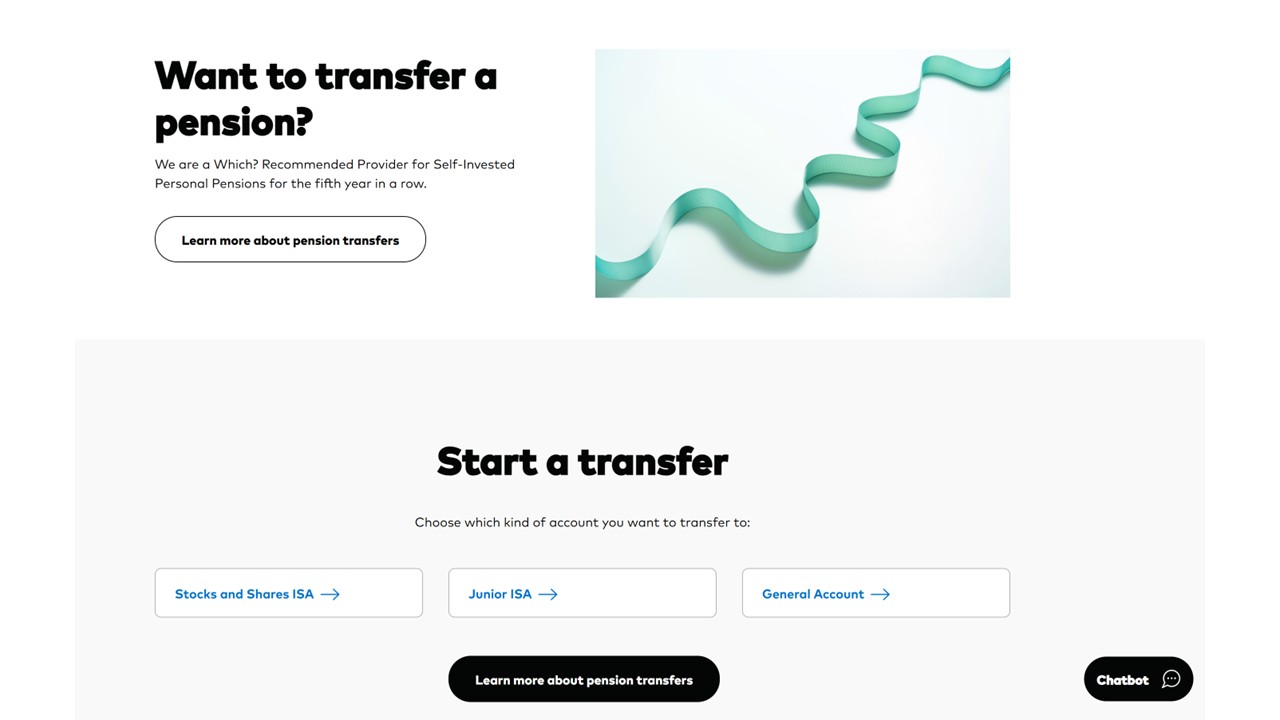
Platforms like Vanguard, Interactive Investor and other good platforms make it super easy to transfer to them.
6. Start the move! Write out the steps you need to take. If you need to write a formal letter or email to your management company, write this letter using the template at the bottom of this post (ask a friend to review it if this is helpful) and send it to your financial advisor.
In some instances you don’t even need to tell your Financial Advisor. When Mark moved his investments from SJP to Interactive investor he filled out the form on Interactive Investors website and never even heard from SJP! Read Mark’s story about his investments and reasons for leaving SJP here.
Pro tip: you may be able to ask the team at your new investment platform for help! In Canada, for example, it’s common when you sign up for an investing platform to have the team at the new investment platform to do the work to move your investments from the old management company to your new investment platform.
📌 A Quick Note on Financial Advice
If you’ve done Rebel Finance School, you already have everything you need to manage your money confidently. You don’t need to rely on someone else to do it for you. And if you ever feel unsure, reach out in the Rebel Finance School Facebook group—there’s a whole community ready to support you.
That said, if you truly believe your situation is super complex and you need professional advice, never pay a percentage-based fee. Instead, look for a qualified advisor who charges a fixed hourly rate. That way, you stay in control and avoid unnecessary costs.
💬 A Personal Note from Alan
Remember: these advisors work for you. They make their living managing your investments—and in most cases, they’ve done a terrible job while charging you a fortune for the privilege. Moving your money isn’t mean or disloyal. It’s you standing up for yourself, taking back control, and refusing to overpay for underperformance.
Here’s what it looked like for one RFS graduate
“I was with SJP – St. James’ Place, an expensive wealth management company. When I realised the impact of fees (4% one-off initial investment fee, 1.5% annual fund fee and 0.5% annual advice fee), and did the maths, I was considerably worse off (just under £¼ million) than if I had invested in a low-fee global index fund for the last 10 years. That realisation made the decision for me—I knew I had to break up with my financial advisor.
You can read about Mark’s similar story.
The process for breaking up should be simple: you have an investment account, you request a transfer, and move to your new platform. But many people feel emotionally tied to their advisor. They may have built a personal rapport with you—sending birthday cards, checking in occasionally, perhaps even earning the trust of friends or family. But remember: your advisor is also a salesperson. You represent a revenue stream, and they’re unlikely to let go easily.
Be strong. You’ve done your research. You know what you want to do. You don’t have to agree to a meeting (I initially did, then cancelled when I realised it was a waste of everyone’s time). If you do meet, just know that their goal will be to change your mind. Stay polite, stay firm. I told mine I was switching to a low-fee global fund because it aligned with my values and priorities. They gave me a list of reasons not to but eventually said, “I’m disappointed, but I understand.”
– RFS graduate
What to do after you’ve broken up with your financial advisor?
Celebrate!!! You’ve done something bold, informed, and incredibly powerful. Take a moment to acknowledge that.
Monitor the process and request the transfer fee reimbursement, if applicable. Stay curious, ask questions, and don’t be afraid to follow up until the move is complete.
And here’s one last, crucial reminder: Don’t just move your money, move your account. If you’re transferring a tax-advantaged account like an ISA, SIPP, TFSA, or RRSP, make sure it’s a formal account transfer — not a withdrawal or closure.
Otherwise, you risk losing all the tax benefits you’ve worked so hard for. Take your time, do it right, and protect the progress you’ve made. 🍍
You are stronger than you know. You are Braver that you realise.
You have got this!
Peace & pineapples
The Rebel Finance School team
PS if you need inspiration, have a look at Alan’s letter to the folks at Wealthify 🙂
PPS If you need a starting point for writing to your advisor, here’s a letter template you can adapt:
Letter template for leaving your financial advisor
Dear [Name of advisor],
I hope this email finds you well.
I’m writing to let you know that I’ve decided to transfer my pension/stocks and shares ISA/general investement account from [name of platform] to another provider.
This decision comes after careful consideration of my long-term financial goals and a desire to reduce the ongoing costs associated with my current arrangement. I now feel ready to manage my investments independently and believe this is the right next step for me.
Could you please confirm whether there are any exit or transfer fees involved, and advise on the next steps required to complete the transfer? If applicable, I’d be grateful if you could let me know whether any of these charges may be waived or reduced.
Thank you for your support to date. I appreciate your help in facilitating this transition.
Kind regards,
[Your Name]
One last thing before you go… Breaking up with your financial advisor might feel daunting but trust yourself. You’ve done the work. You’ve learned the ropes. You’re not just walking away from high fees and opaque advice, you’re stepping into a future where you call the shots.
So, take a deep breath, hit send on that email, and raise a glass (or a pineapple smoothie) to your financial independence.
We’ll be cheering you on every step of the way. 🍍🚀

A HUGE thank you to Ninjas Jane Snyder, Lisa and Gemma for writing this article. This would not have happened without out their energy, dedication and desire to help other people.
Related Articles

Blog, Financial Independence, Save and Invest
Where do I put my money? Hello there! We wrote this article in 2025. Platform fees in the UK have changed a lot since then! Look out for an updated article coming soon.....With such a confusing array of platforms, funds and fee structures how do you ever decide where to put your money? In [...]

Blog, Donegan Update, Keeping Track
5th Jan 2026 At the end of the year, Katie and I always get excited because this means a chance to do our annual finance review! How often do you review your finances? Do you check daily, as some people do when they first find out about investing, or are you a set it [...]

Blog, RFS2025, RFS2026
After every single Rebel Finance School session in 2025, Katie and I sat down and wrote notes about what we could improve for next time. We had a lot of ideas. But here’s the thing we’ve learned the hard way over the years: our ideas are not as important as what actually works for real [...]
